A lot of drummers start searching for when to replace bass drum head at the exact same moment. The pedal still works. The drum still makes noise. But the kick has gone flat, the front head looks tired under lights, and the whole kit suddenly feels older than the band wants to look.
That's the right moment to stop thinking about replacement as a chore.
A bass drum head change is maintenance on the back end and marketing on the front end. The batter side affects feel and attack. The resonant side faces the room, the camera, the crowd, the promoter, and every phone in the audience. If a band is already going to pull a head off the drum, that's the cleanest time to stop settling for a blank front and turn the kick into something that represents the project.
Your Bass Drum Is More Than a Sound
A drummer notices the problem before anyone else does. The beater starts sinking into a worn spot. The drum loses its snap. Tuning gets fussier. Then load-in happens, the front of the bass drum catches the venue light, and the head looks every bit as tired as it sounds.

That's not bad news. That's timing.
Most players treat a bass drum head swap like replacing a worn tire. Necessary, unglamorous, overdue. But for any band, teacher, solo artist, worship team, or school program that plays in front of people, the front head is the largest logo placement on stage. It's the one surface that keeps showing up in photos, clips, rehearsal footage, press shots, and live video.
The maintenance moment that also fixes the look
A worn kick drum usually announces itself in two ways. The sound gets less alive, and the visual stops helping. Even if the resonant side still works, a generic or beat-up front head can make a polished group look thrown together.
Practical rule: If the bass drum has started sounding worn or looking dated, replacement is already a branding decision.
The audience doesn't separate tone from presentation. They hear the kick, but they also see the front of the drum every time the band hits the stage. A custom resonant head doesn't just decorate the kit. It gives the project a face.
Probably now, and that's good
The common question is “When do bass drum heads need replacing?” The more useful question is “If the drum is due for attention, why put the same anonymous front head back on?”
A replacement is the best possible trigger for an upgrade because the work is already happening. The head is coming off. The visual can change. The band can lock in a logo, sharpen the stage identity, and stop wasting the biggest branding surface in the room.
The Two Heads of the Beast Batter vs Resonant
A bass drum has two jobs because it has two heads. Treating them like one part is how drummers end up fixing the sound while leaving the stage look stuck in the past.

The batter head is the work side. It takes every hit, controls feel, and usually gives up first. The resonant head is the face of the drum. It shapes response, but on stage its bigger job is visual. It is the panel everyone sees in the room, in photos, and in video.
Batter head means function first
Judge the batter head with your foot and your ears. If the pedal feels slow, the attack has gone soft, or the drum fights you every time you tune it, the batter head is the first suspect.
You do not need to wait for a split.
A bass drum batter can still be physically intact and already be finished in practical terms. Once the beater area gets dented, the surface loses consistency. The response changes. The drum stops giving you the clean punch you expect.
Clear batter-side replacement signs include:
- Visible beater damage. Deep indentations, pitting, or a warped impact zone mean the head is no longer reacting evenly.
- A dead or sluggish feel. The pedal response gets less immediate and the rebound feels flat.
- Tuning that never settles. If the drum keeps drifting or refuses to speak clearly, the head has likely stretched past its useful life.
Resonant head means presentation first
The front head plays a different role, so it deserves a different standard. A resonant head can still function and still be the wrong head for the kit.
That matters for any group that performs in front of people. If the front head is scratched up, yellowing, carrying an old logo, missing a logo, or cut with a rough mic hole, it is not just a cosmetic issue. It makes the whole band look less organized than it sounds.
Here is the practical split. Replace the batter because it stopped performing. Replace the resonant head because it stopped representing.
A worn batter head costs you punch. A generic front head costs you presence.
That is why the replacement window matters so much. You already have the drum apart. You are already spending the time. Swapping the front head for another blank one is the missed opportunity. A custom resonant head turns routine maintenance into a visible upgrade that works at every show without extra setup, extra gear, or extra explanation.
If you want to see what that looks like on real kits, browse these Custom Bass Drum Head examples. The difference is obvious. A band looks more established when the front of the kick is the band's own.
Is It Time The Custom Upgrade Checklist
Your singer just booked better shows. The band finally has photos worth posting. Then the kick drum rolls onstage with a scuffed front head, an old logo, or nothing on it at all. That is the moment a routine head change should turn into a branding decision.
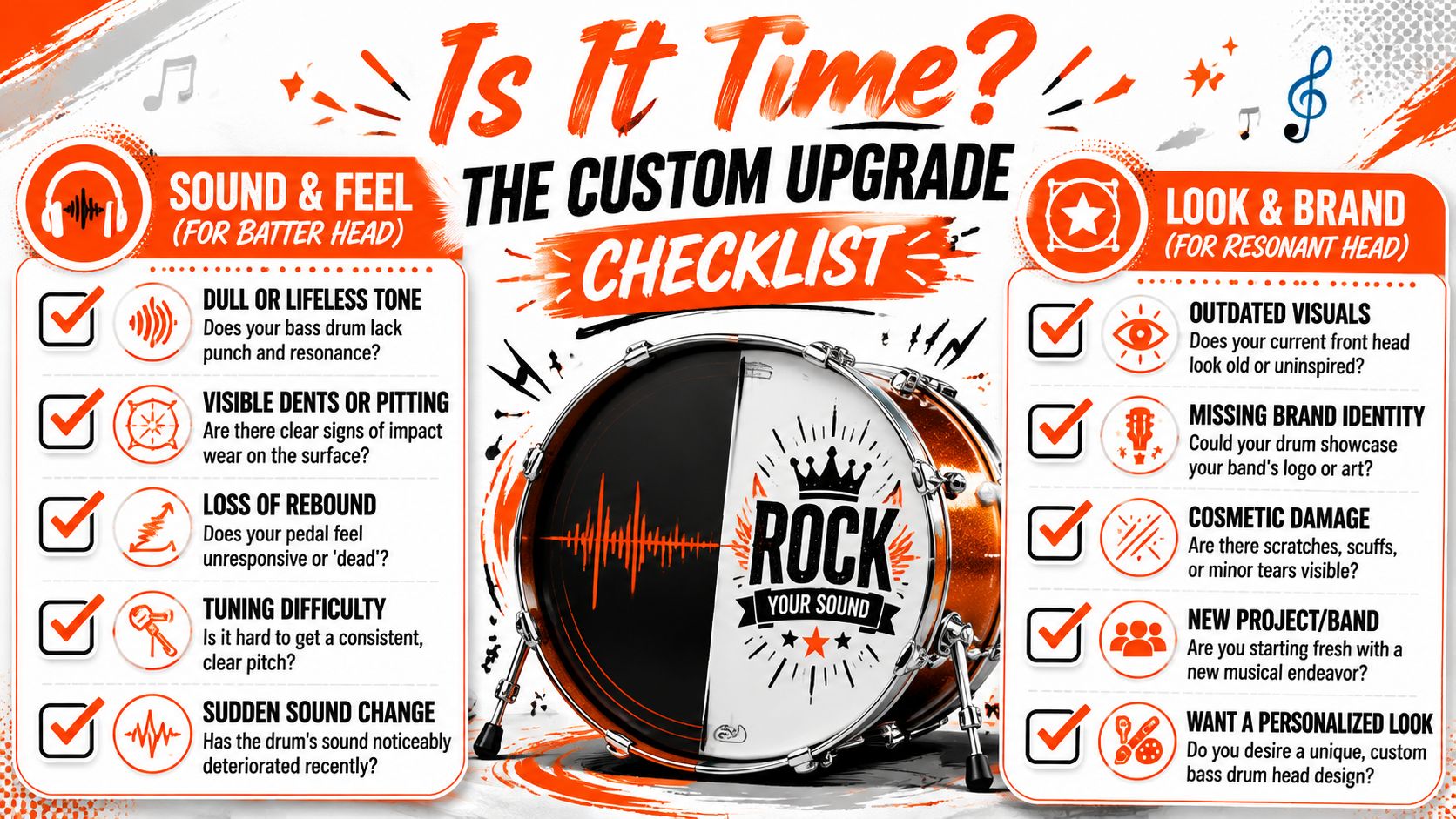
A bass drum head earns its keep in two different ways. The batter has to feel right under the pedal. The front head has to make the band look like it has its act together. If either side is falling short, the drum is due for attention.
Sound and feel
Use a simple test on the batter side. If the drum no longer gives you the attack, consistency, or rebound you expect, stop squeezing extra life out of it and replace it.
Check for these signs:
- The tone lost its punch. The note is still there, but the drum sounds tired.
- The impact area is beat up. Heavy wear around the beater spot usually means the head is near the end of its useful run.
- The pedal feels sluggish. A kick that fights your foot is costing you control.
- Tuning slips too fast. If you keep fixing the same problem, the head is usually the problem.
- The drum changed overnight. A sudden drop in feel or sound deserves a head swap before anything else.
That checklist is about performance. Keep it strict.
Look and brand
The front head needs a tougher standard than "still usable." It is the biggest visual surface on your kit, the part that shows up in stage photos, video clips, promo shots, and the first few rows of the room. A blank or beat-up resonant head makes a good band look less prepared than it sounds.
Replace the resonant head if any of these hit home:
- The front is generic. A stock logo or plain black head does nothing for the band.
- The branding is old. Old logo, old name, old artwork. Replace it.
- The finish looks rough under lights. Scratches, fading, yellowing, and messy mic holes show up fast.
- You are entering a new cycle. New release, new lineup, tour run, festival season, or updated merch.
- The kick still looks like an afterthought. Fix that now, not after the next photo set.
Brand check: If the design does not belong on your next shirt, it does not belong on the front of your kick.
This is the best time to improve more than the drum. You already need a replacement. Use that purchase to improve stage presence at the same time. A custom resonant head keeps working every show, in every photo, without extra gear or setup. If you need help with artwork, file prep, or layout, start with this guide on designing custom bass drum heads.
Timing Your Upgrade A Schedule for Every Drummer
You hear the kick starting to flatten out at rehearsal. Then you look at the front of the drum under stage lights and realize the bigger problem. The head is tired, and the band still looks like it grabbed whatever came in the box.
That is why replacement timing should follow two clocks. The batter head gets changed when wear starts affecting feel, attack, and tuning. The resonant head gets changed when the band is about to be seen. If you only replace the part people hear and ignore the part people photograph, you miss the best branding spot on your kit.
A simple schedule works well for most drummers. Change the batter head on a regular maintenance cycle based on how hard and how often you play. Change the front head before any stretch of shows, filming, promo work, or seasonal reset where the band needs to look organized and current.
Custom head upgrade schedule by drummer type
| Drummer Type | Typical Batter Head Replacement | Best Time for a Custom Resonant Head Upgrade |
|---|---|---|
| Gigging band drummer | Replace it whenever regular shows start killing attack, rebound, or tuning stability | Order the custom front head before a run of dates, a tour, festival season, or any period when the band will be photographed a lot |
| Studio or session drummer | Replace it when the kick stops sounding consistent from take to take | Install a custom front head before live session videos, artist content days, press shots, or a branding refresh |
| School, church, or worship player | Replace it on a routine upkeep cycle tied to frequent shared use | Update the front head before a new semester, conference, holiday season, or platform refresh |
| Hobbyist or home player | Replace it when the feel goes off or the drum stops responding the way it should | Upgrade the front head when you want the kit to look finished, personal, and worth putting in photos or videos |
The smart move is to pair maintenance with visibility.
Gigging drummers should not wait until the first show of a run to realize the kit looks generic. If the batter head is close to done, treat that as your order window for a custom resonant head. One purchase keeps the kick sounding right and gives the whole band a cleaner identity on stage.
Studio players need consistency first, but appearance matters the second a camera enters the room. A front head with the right logo or artist mark makes the kit look intentional in live takes, social clips, and behind the scenes footage.
School, church, and worship players have a different job. The same kit gets seen over and over, often by the same crowd. A clean custom front head makes the setup look maintained, current, and taken seriously.
Home players have the most freedom, and that is a good thing. You do not need to wait for a head to fully die before improving the look of the kit. If you want more guidance on replacement timing, read Custom Bass Drum Head's tips for drummers.
Designing Your New Head From Idea to Install
You pull the old front head off, set the new one on the floor, and realize the band still has no clean logo file, no plan for the mic port, and no idea what the drum should say from twenty feet away. That is how a simple replacement turns into a wasted branding chance.

A worn-out head already told you it was time to act. Use that moment well. The new resonant head should do two jobs at once. It should finish the kit visually and put your name where the crowd, the photographer, and every phone camera will catch it.
Start with the design choices that actually matter
Good custom heads are easy to read and hard to forget. Busy artwork fails fast on stage.
- Use art that reads at a distance. Small details disappear under lights and in wide photos.
- Pick one job for the head. Band logo, artist name, school mark, event graphic, or a visual statement. Choose one clear priority.
- Plan the mic port before finalizing the layout. Port placement can wreck a centered logo or make an off-center design look intentional.
- Leave some breathing room. A design that fills every inch usually prints fine and looks crowded in real use.
Build for stage use, not just approval on a screen
The mockup is not the test. Stage lights, camera flash, and cheap phone video are the test. Strong contrast helps. Clean spacing helps. So does discipline.
Use a simple review process before you send the file:
- Step back and check readability. If the name disappears from a few steps away, fix it.
- Check the layout with the port included. Do not approve clean artwork and deal with the hole later.
- Use a clean source file. Blurry art looks worse once it is printed large.
- Match the rest of the band's identity. Your drum head should agree with your merch, posters, and social graphics.
For file prep, art cleanup, and print-friendly layout ideas, use this custom drum head artwork guide.
A custom bass drum head works best when you treat it like stage gear. It has to perform, represent the band, and look right the second it comes out of the case.
Make Your Next Drum Head Count
Load-in is done. The kit is up. The lights come on. Your drummer counts off, and the first thing half the room sees is the front of the kick. If that head looks scuffed, generic, or like it belongs to an old version of the band, you are wasting the center of your stage.

Bass drum heads wear out slowly, which is why bands put off replacing them. The punch gets dull. The feel gets tired. The front head starts looking like an afterthought. Waiting longer rarely saves you anything. It just lets the kit sound weaker and look less professional at the same time.
A replacement head should solve both problems.
The smart move is to treat this maintenance job like a branding decision. Your resonant head sits dead center in photos, videos, and every live set. It is one of the few pieces of gear that works as stage equipment and advertising on the same night. A blank stock head gives away that space for nothing.
That is why replacement time matters. You already have the drum apart. You are already spending money. You already know the old head is no longer pulling its weight. That is the exact moment to improve how the band is seen, not just how the kick looks in the case.
If you are ready to stop treating the front head like filler, order fully custom drum heads for bands and turn a routine swap into a cleaner, sharper stage identity.
If the kick sounds flat or the front head no longer represents the band, replace it with intention. Custom Bass Drum Head gives you a direct path from artwork to stage-ready print, with options built for drummers who need the head to look right under lights and hold up on real gigs. Start the next head with a logo worth seeing.