A lot of drummers land on a 16 inch bass for a practical reason first. The stage is tight, the gig is quieter, the load-in is brutal, or the kit needs to stay compact without looking like an afterthought. Then the next question shows up fast: what should the front head look like on a drum this small, and how should that choice work with the sound instead of fighting it?
That question matters more on a compact kick than it does on a bigger shell. A smaller resonant head gives less room for artwork, less margin for bad file prep, and less forgiveness if a port cuts through the wrong part of the design. It also changes how the drum presents on stage. On a 16 inch bass, the custom head isn’t just decoration. It becomes the face of a deliberately compact setup.
Why Your 16 Inch Bass Drum Deserves a Custom Head
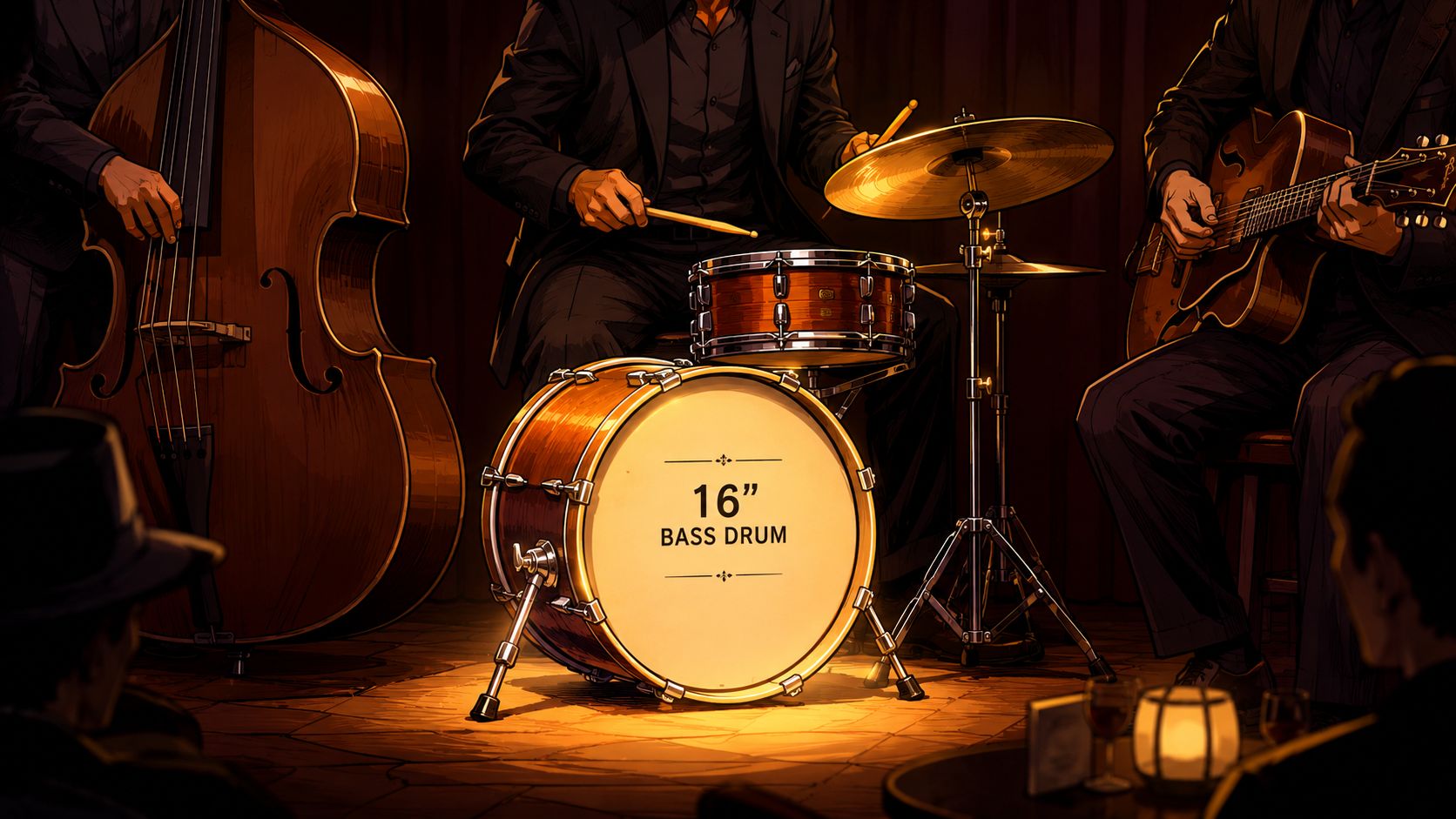
You roll into a small club with a compact kit, set the bass drum front and center, and suddenly that 16 inch head is the first thing everyone sees. On a drum this size, the resonant head does more than finish the shell. It tells the room whether the kit was chosen on purpose or just trimmed down to fit the gig.
A 16 inch bass is a standard size in modern kits, and it earns its place. Players use it because it loads in fast, fits tight stages, stays controlled at lower volume, and gives a more defined footprint than a larger kick. The visual treatment should match that same intent.
Small drum, sharper identity
Small front heads are less forgiving.
On a 22, average artwork can survive because the diameter gives everything more room. On a 16, bad spacing shows up immediately. Thin type gets lost. A low-contrast logo turns gray under stage lights. A port placed without planning can cut through the one part of the design that needed to stay intact.
That is why the best custom heads for compact kicks usually look more disciplined, not more crowded. One strong mark in the center. Clear negative space. Type large enough to read from the floor. Artwork built around the actual hardware layout, not dropped onto a circle at the last minute.
Practical rule: On a 16 inch head, one bold graphic usually reads better than a full-band poster layout.
Why customization matters more on this size
A compact bass drum already says something about the player. It says the kit was chosen for a job, not by habit. The front head should carry that same logic.
For a jazz trio, that might mean a clean logo that still reads in warm, dim light. For a lesson studio, it might be a simple mark that looks polished in recital photos. For a songwriter or pit player, it might be a monogram or restrained graphic that keeps the kit professional without pulling focus from the stage.
The print choices matter too. On a 16 inch canvas, artwork, ink coverage, and head layout affect both appearance and function. Heavy edge detail can get crowded by the hoop. Oversized text can fight the lugs visually. If a mic port is part of the plan, the art needs to be composed around it from the start, not revised after approval. A good guide to custom print bass drum heads helps show what changes once design has to share space with tuning, ports, and real-world stage use.
The Unique Sound of a 16 Inch Bass
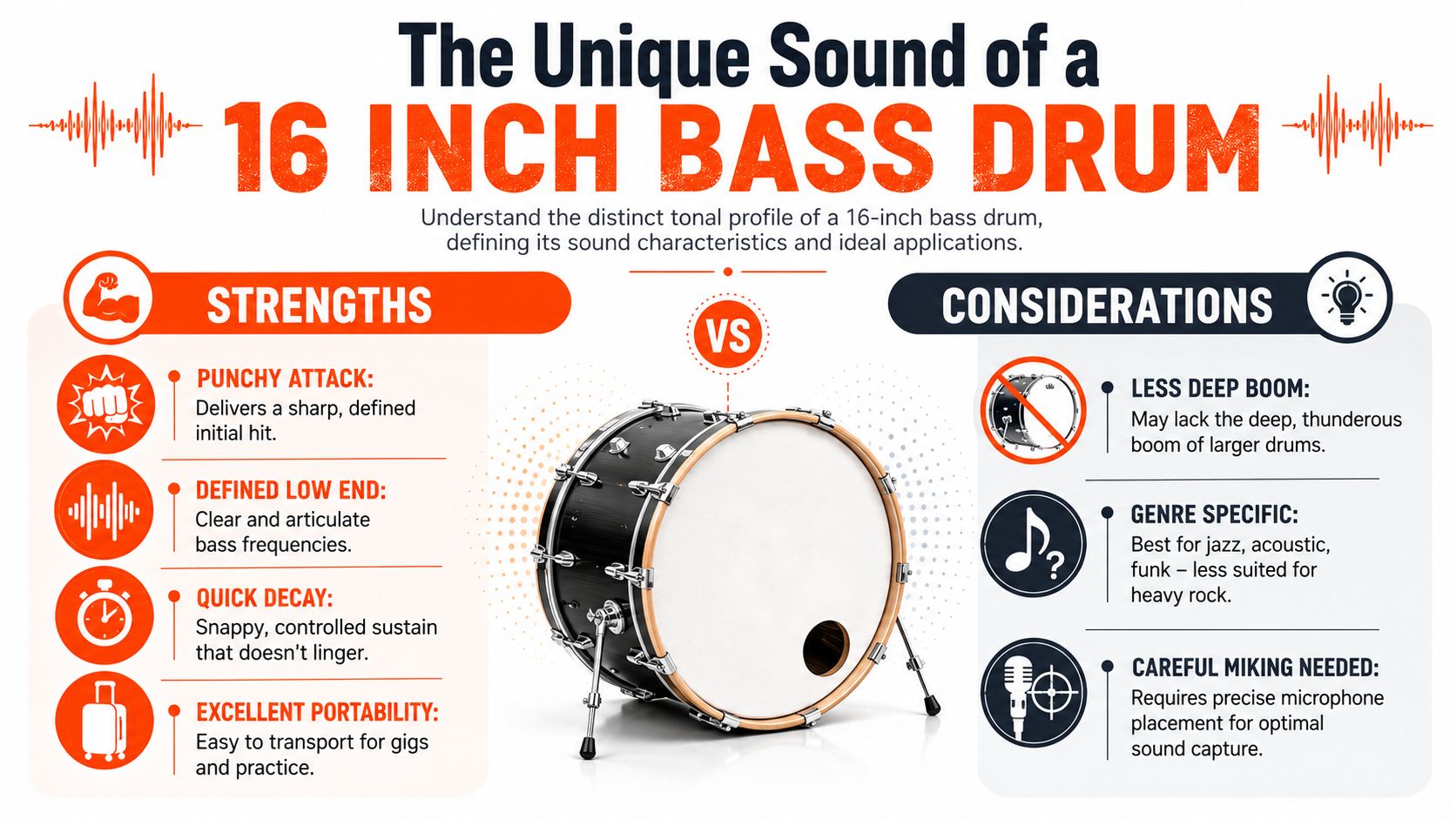
A 16 inch bass drum earns its place fast. Set one up in a trio room, a pit, a wedding stage, or a tight club corner, and the reason becomes obvious on the first few notes. The drum speaks quickly, stays controlled, and gives you a defined low end without taking over the whole mix.
That sound should guide the front head order as much as the artwork.
What the drum does well
A 16 inch bass usually gives you a fast attack and a shorter note. The beater response feels immediate, which is a big part of why these drums work so well with upright bass, piano, acoustic guitar, tighter funk parts, and lower-volume gigs where definition matters more than sheer size.
From the print side, that matters. A drum with a compact, focused voice usually looks best with a front head that supports that same character. Clean layouts, strong shapes, and artwork that still reads around a port tend to fit the instrument better than busy graphics packed edge to edge.
| Natural trait | What it means for a custom front head |
|---|---|
| Fast attack | Port-friendly artwork usually works better than layouts that depend on an unbroken full-face print |
| Shorter decay | A closed resonant head can help keep some extra body if the drum feels too clipped |
| Focused low end | Simple artwork often matches the drum’s voice better than dense, detail-heavy graphics |
I see one mistake all the time in custom proofs. Players choose art for a 16 like they are dressing a much larger kick, then add a big port and expect the design and the sound to stay balanced. On this size, every cutout and every inch of inked space has more visual and practical weight.
What can work against it
The usual problems are predictable.
- Porting too aggressively: A large port on a small head can dry the drum out faster than expected and leave very little room for a clean design.
- Designing for the mockup instead of the stage: Fine details may look sharp on a screen but disappear once the head is mounted, tensioned, and viewed from the audience.
- Forcing a “big kick” look onto a compact drum: Oversized block text, crowded edge elements, and heavy visual fill can fight the drum’s natural feel instead of supporting it.
A 16 inch bass sounds best when the setup respects what the shell already wants to do. It gives punch, clarity, and control. It does not need visual tricks that suggest a huge, boomy voice the drum was never built to produce.
For readers matching sound goals to resonant head choices, this bass drum tone guide explains how front head decisions affect the final result.
A 16 inch bass works best when the sound, the head material, and the artwork all point in the same direction.
Tuning and Miking Your Custom Head
A custom resonant head only performs well if it’s treated like part of the drum’s sound system, not just the printed front cover. On a 16 inch bass, tension and porting choices affect the result immediately because there’s less shell and less head area to hide sloppy decisions.

The tuning relationship matters
Professional drummers often use asymmetric tension on a 16-inch bass drum. The batter head is tightened about a quarter to a half turn more than the resonant head, while the resonant side stays much looser, creating a focused, punchy tone with projection but less excess sustain, as shown in this 16-inch bass tuning demonstration on YouTube.
That matters for buyers ordering a printed front head because the artwork sits on the side that many players intentionally keep looser. The printed head still has to look clean under lower tension. A design that depends on tiny edge details can look less balanced once the drum is tuned and viewed from off-center angles under stage lights.
Porting changes both sound and layout
On a small resonant head, port placement is never an afterthought. It affects miking, air movement, and visual composition all at once.
Three common directions make sense:
- No port works when the player wants the fullest front-head look and doesn’t need easy inside-the-drum microphone access.
- Offset port keeps the center logo intact and gives engineers a practical access point.
- Design-integrated port turns the port into part of the visual concept, such as placing it where negative space already exists.
The best 16 inch bass drum designs account for the mic hole before the file is ever uploaded.
Miking choices start at the design stage
For live use, many drummers want a setup that gives the engineer options without wrecking the head graphic. For studio use, some want a cleaner front with no hole and would rather mic from outside or remove the head when needed. Neither is automatically right.
A useful way to decide is to ask what the drum has to do most often:
- Frequent club gigs usually favor convenience and consistency.
- Photo-heavy branded setups usually benefit from preserving the front visual.
- Home recording setups often need flexibility more than a one-size-fits-all answer.
For a deeper look at how resonant tension affects response, this drum head tuning article is worth reading before locking in a port and head setup.
Designing Artwork for a 16 Inch Canvas
The biggest design mistake on a 16 inch bass drum is thinking of it as a miniature version of a larger head. It’s not. It behaves more like a logo application with very little spare real estate. The design has to read quickly, survive stage distance, and still look intentional up close.
Start with one dominant element
A compact head needs a hierarchy. One main idea should lead, and everything else should support it.
That usually means:
– A bold band name rather than a full flyer-style composition
– A symbol or monogram with strong contrast
– Simple supporting text only if it remains readable at distance
Negative space does a lot of work on a smaller drum. If the art fills every inch, the result often looks crowded before it ever reaches the stage.
Design checkpoint: If the logo looks small on a laptop screen mockup, it’ll look even smaller once it’s mounted across a room.
File prep has to be exact
This part isn’t optional. To ensure sharpness on a 16-inch bass drum head, raster artwork like a JPG or PNG must be created at the exact final size of 16 inches by 16 inches at a minimum of 300 DPI. For logo-based designs, vector files such as SVG or AI are preferred because they scale cleanly without losing edge sharpness, as explained in this custom bass drum head artwork guide.
That gives buyers a simple rule:
| Artwork type | Best use on a 16 inch bass | What to watch for |
|---|---|---|
| Vector | Logos, line art, clean symbols, text | Usually the safest option for sharp edges |
| Raster | Photos, painted textures, blended artwork | Must be built at final size and proper resolution |
What prints well on this size
The designs that usually translate best on a 16 inch bass share a few traits:
- Thicker lines: Fine line work can get lost visually, even if the file itself is technically sharp.
- Clear contrast: Dark-on-dark and low-contrast gradients often disappear on stage.
- Centered intent: If the artwork has a focal point, it should feel deliberate in the circular format.
- Port awareness: If a hole will be added, the design should avoid placing key text or faces in that area.
A strong 16 inch design often feels more like album-cover discipline than poster design. It says less, but says it more clearly.
For more visual direction before uploading art, this custom bass drum head graphics guide can help refine layout choices.
Choosing Your Head Materials and Port Options
Once the artwork is ready, the buying decision usually comes down to two practical questions. What should the head itself look like as a surface, and should it have a port?
Those choices affect both the final appearance and the way the drum behaves in the room.
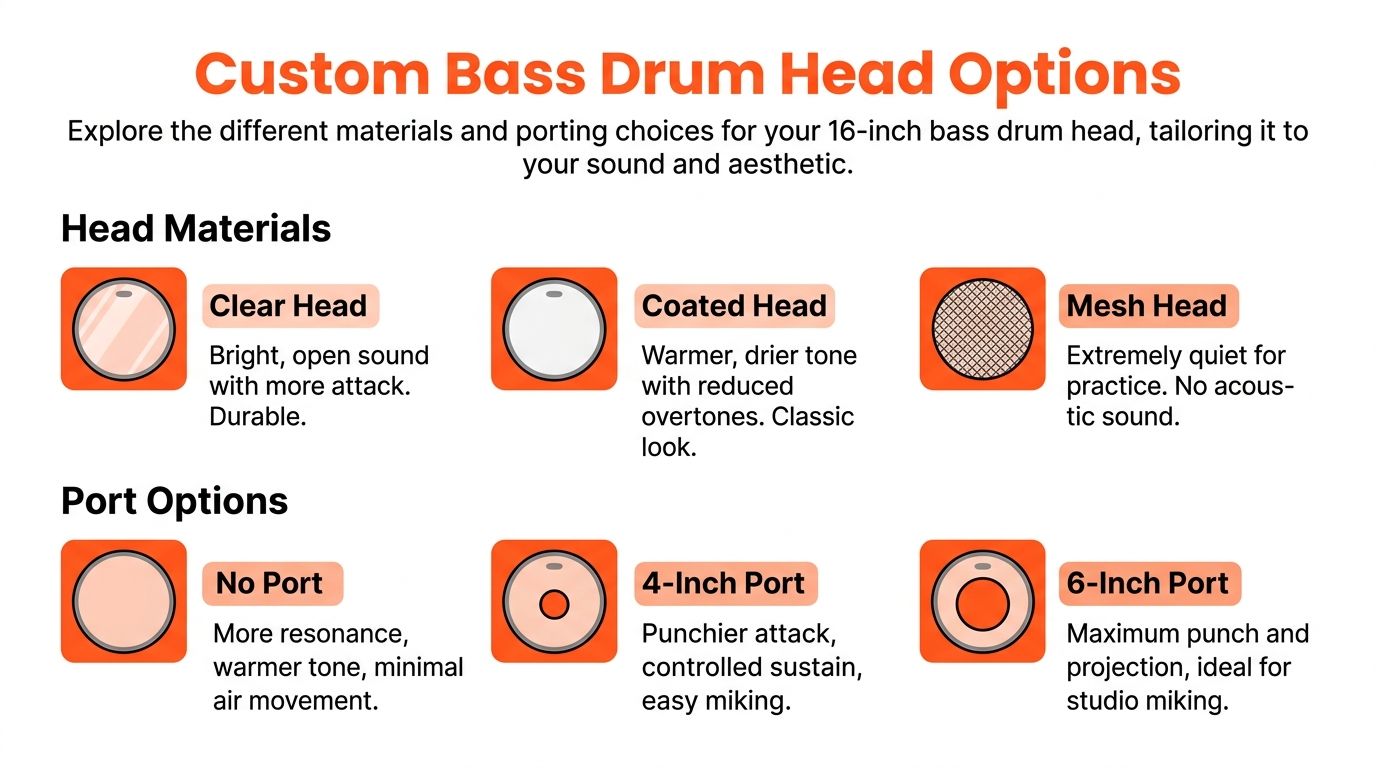
Front head versus batter head
Most custom print decisions belong on the resonant front head, not the batter side. That’s the visible surface the audience sees, the one photographers capture, and the one that can carry branding without getting beaten up by the pedal.
For a 16 inch bass, this distinction matters even more because the visible area is already limited. Putting the visual emphasis on the resonant side preserves the small drum’s best branding surface.
Surface choice affects the vibe
Even without getting lost in brand talk, surface feel changes both aesthetics and expectation. A cleaner, brighter-looking head can make graphics feel more modern and direct. A softer, more traditional-looking surface can suit vintage-inspired kits, roots sets, jazz combos, or studio looks where the drum should feel understated rather than flashy.
This decision is usually easier if the buyer thinks in visual terms first:
- Crisp and contemporary fits bold logos, strong contrast, and modern stage branding.
- Warm and classic pairs better with restrained typography, vintage marks, and heritage-style art.
- Minimal and practical works for teaching studios, pit setups, church stages, and situations where professionalism matters more than spectacle.
A broader overview of front head types and how players think about them appears in this drum head comparison guide.
A custom head should match the kit’s visual language. The best design in the wrong finish can still feel off.
Port options on a 16 inch bass
Porting deserves more care on a smaller diameter because every cut takes a larger share of the visible space.
A useful comparison looks like this:
| Option | Visual effect | Functional trade-off |
|---|---|---|
| No port | Maximum uninterrupted artwork | Less direct mic access |
| Small offset port | Preserves most of the design | Better practicality for many gigging setups |
| Larger or more prominent port | Strong visual interruption | Easier access and a more direct presentation |
The right answer depends on how the drum earns its keep. A compact jazz or acoustic setup may value the uninterrupted front look. A working club kit may need easier miking more than a perfect full-circle graphic. A branded studio kit may want the port hidden in a lower area or integrated into the artwork so it feels intentional.
Don’t let the hole ruin the concept
The easiest way to protect a design is to treat the port as part of the composition from the start. Build around it. Use empty space there. Put it where the design naturally breathes.
That works better than finishing the art and then carving into the most important part later.
Make Your Compact Kit Stand Out
A 16 inch bass doesn’t need apologies. It needs decisions that respect what it is.
This size works because it’s compact, controlled, and visually distinctive when it’s handled well. The front head should do the same job. Clean artwork, correct file prep, sensible material choices, and a port plan that supports both sound and layout will make the drum feel complete instead of improvised.
The good news is that the buying path is straightforward once the right questions are asked. Will the head carry a bold logo or a simpler mark? Does the setup need a port for regular miking? Is the finish supposed to feel modern, vintage, understated, or stage-forward? Those answers shape a much better result than guessing from a generic product page.
A well-made custom resonant head is worth it on a 16 inch bass because the drum sits in a category where details matter more, not less. The canvas is smaller, so the design has to be smarter. When it is, the kit looks intentional from the first glance and stays useful during practical use in rehearsals, gigs, classes, and sessions.
That’s the sweet spot. A compact drum that sounds right, looks professional, and reflects the player behind it.
If a 16 inch bass is already doing a specific job in the kit, the front head should finish that job visually. Custom Bass Drum Head lets drummers upload artwork, position the design, choose sizing, and build a printed head that fits the drum instead of forcing a generic look onto it.