
A band usually reaches this decision late in the process. The songs are ready, the set is tight, and someone finally says the obvious part out loud. The front of the kick still looks generic.
That’s when the search for a custom head starts, and that’s also when the CustomBassDrumHead.com vs DrumArt.com question comes up. For a buyer who’s actively trying to get a logo printed, this isn’t a casual gear debate. It’s a purchasing decision tied to stage look, setup speed, durability, and whether the final head shows up looking like the mockup.
The practical differences matter more than the marketing language. Some buyers care most about finish options. Others need a head that can survive repeat loading, hot lights, and fast changeovers. Plenty of drummers also need a simple answer to a basic question. Will this be easy to order without surprises?
Here’s the quick view.
| Buying factor | What matters in practice | Best fit when that’s the priority |
|---|---|---|
| Print durability | Whether artwork is integrated into the head or applied as a separate layer | Direct-to-head printing tends to be the safer stage choice |
| Visual planning | Whether the online preview matches the delivered head | A live mockup workflow reduces guesswork |
| Transparency | Whether pricing is posted clearly by size | Clear listed pricing is easier for budget planning |
| Special finishes | Whether textured or laminate-style looks matter more than print integration | Finish-first buyers may care more about these options |
| Backlighting | Whether a clear head can keep selected areas transparent for stage effects | A clear-head workflow matters here |
| Mic port decisions | Whether placement is treated as more than a cosmetic option | Buyers who care about soundcheck consistency should pay attention |
Choosing Your Custom Drum Head Printer
The drummer in this situation usually isn’t shopping for a novelty item. The band needs a front head that looks right under lights, loads in without drama, and doesn’t create extra work right before a show. That changes how the comparison should be made.
A custom bass drum head sits at the intersection of branding and function. It has to carry a logo or graphic well, but it also has to fit the drum correctly, work with the chosen port layout, and hold up once the kit starts moving between rehearsal rooms, clubs, churches, schools, and studios.
That’s why this choice isn’t just about who offers online design tools. It’s about which ordering process produces fewer mistakes and a better real-world result.
What buyers usually care about first
Some concerns show up almost every time:
- Artwork confidence: Buyers want to know the uploaded file will print the way it looks on screen.
- Material confidence: They don’t want a finish that starts looking tired after normal gig use.
- Deadline confidence: If the show date is coming up, a vague process becomes a problem fast.
- Cost clarity: Hidden art charges or unclear add-ons make budgeting harder than it needs to be.
A useful way to approach the decision is to ignore hype and look at the workflow from file upload to stage use. That includes print method, design preview, sizing, ports, support, and whether the vendor explains enough to help the buyer avoid a bad choice.
For buyers who want a broader checklist before committing, this guide on how to choose a custom drum head printing company is worth reviewing.
A custom head is rarely judged from three feet away in a practice room. It’s judged from the audience, by a photographer, and by a sound crew trying to work quickly.
Printing Method and Material Quality
A bass drum head can look great in a product photo and still disappoint after a few load-ins. The print method decides a lot of that.
Direct print versus overlay thinking
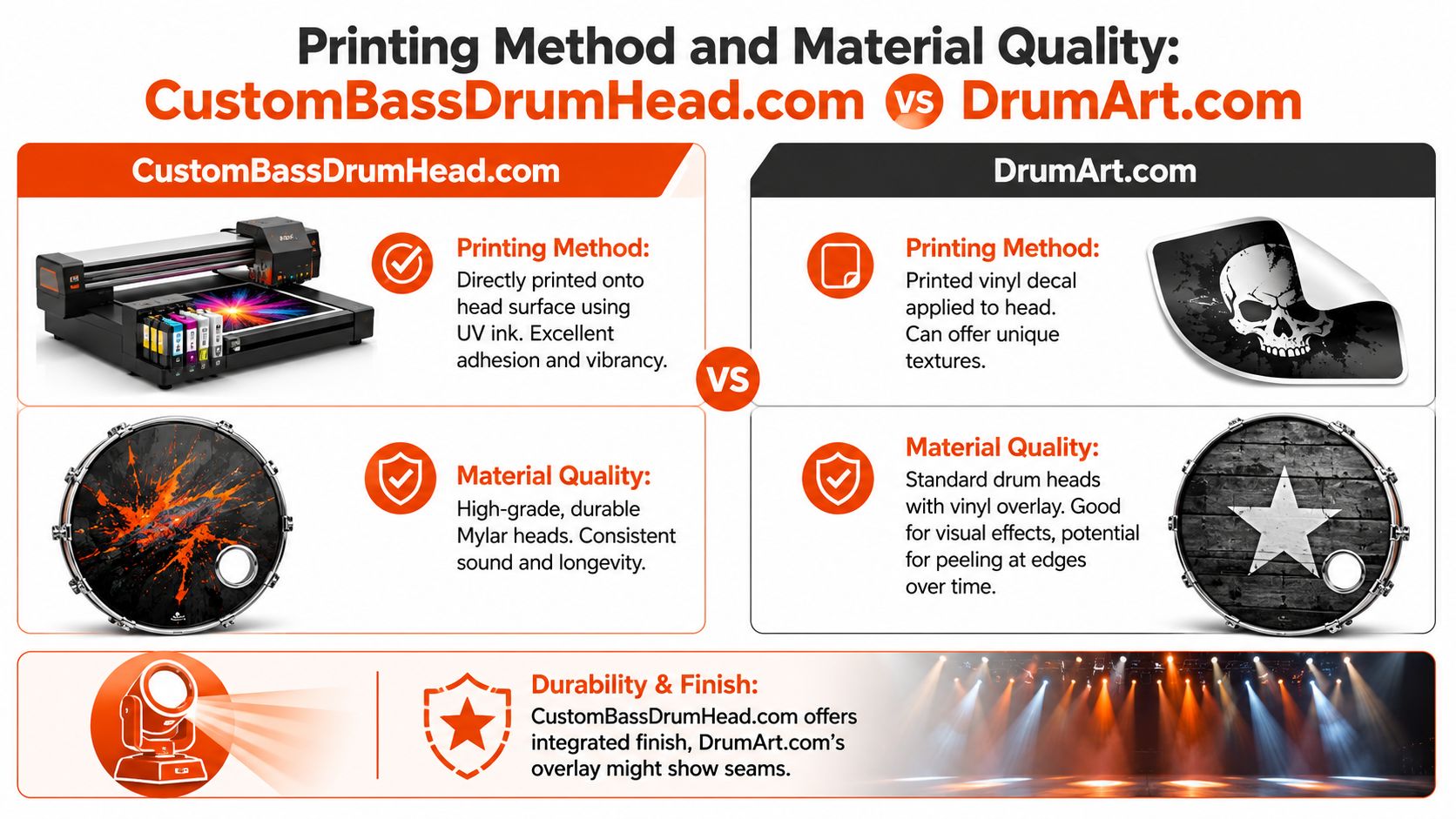
The practical split is between artwork printed into the head and artwork added as a separate surface layer. According to Custom Bass Drum Heads order information, its process uses direct-to-head printing, with the image integrated into the drum film instead of applied as a sticker or decal.
That matters more on stage than it does on a website mockup. A separate layer can introduce edges, thickness changes, and wear points that only become obvious after transport, setup, teardown, and a few nights under hot lights. An integrated print usually keeps the head looking and feeling more like a standard premium head, just with your artwork on it.
Material behavior matters too. As noted earlier, the company uses UV-cured silkscreen inks designed for long outdoor durability, and it offers clear-head printing with selected areas left transparent for backlighting. For bands running lights behind the kick, that is not a small detail. It affects whether the logo glows cleanly or turns into a muddy circle.
What shows up on stage
Under stage lighting, buyers usually notice a few specific things fast:
| On-stage concern | Why it matters |
|---|---|
| Surface consistency | Uneven layers reflect light differently and can make the print look cheaper from the crowd |
| Edge wear | Added materials create more places for lifting, fraying, or visible wear |
| Transparency control | Clear sections need to stay clean and intentional if the kick is part of the lighting design |
| Heat and handling | Repeated loading, hands on the head, and warm lights expose weak finishes quickly |
I care about this most on black stages with strong front wash. That is where glossy seams, slight bubbling, or a raised decal edge start showing up in photos and from the audience.
The practical trade-off
A layered or laminate-style finish can still be the right call if the main goal is a specific texture or visual effect. For a working band head, direct printing is usually the safer bet because it reduces extra failure points and keeps the surface more consistent.
It also affects the sound crew in a small but real way. A cleanly printed resonant head with intentional clear areas and no added lifting edges is easier to mic around, easier to port cleanly, and less likely to create distracting reflections once stage lighting hits it. Buyers who want a closer look at the differences can read this breakdown of screen printed drum heads vs direct printed drum heads.
Practical rule: For a head that will travel, face lights, and get photographed, integrated printing usually holds up better and looks more professional longer.
The Design Experience From Upload to Mockup
A custom head purchase gets much easier when the design tool removes uncertainty. The buyer shouldn’t have to guess how the final art will land on the circle, whether the scale is right, or whether the port location will interfere with the logo.
That’s where the design workflow separates casual customization from a reliable ordering system.
What a buyer needs from the design tool
A usable workflow should answer a few questions immediately:
- Can the platform accept the file format already on hand?
- Can the buyer see placement before ordering?
- Does the mockup reflect the actual result closely enough to approve with confidence?
- Can port choices be handled in the same flow instead of through back-and-forth messages?
The available verified details are clear on one side of this comparison. DrumART describes its HeadBuilder as a purpose-built online system for control over print finish and ports. The same verified data also states that Custom Bass Drum Heads supports uploads in JPG, PNG, SVG, PDF, or vector formats with a live mockup matching the final result.
That file support matters more than it sounds. Bands often have artwork in whatever format came from the designer, social media manager, label contact, or friend who mocked up the logo. A platform that can accept multiple standard formats reduces friction at the exact moment buyers are trying to get an order moving.
Confidence beats novelty
The strongest design experience isn’t the one with the flashiest interface. It’s the one that makes approval easy.
When buyers can upload art, place it visually, choose the port layout, and see a mockup that matches the printed result, they don’t have to rely on hope. That lowers the risk of common mistakes such as:
- Oversized logos that look crowded once mounted.
- Off-balance placement that seemed fine on a flat file but not on a drum.
- Port conflicts where the hole cuts into the most important part of the graphic.
- Unexpected cropping caused by poor preview logic.
A custom head is usually part of a larger visual system. The band logo already exists on posters, socials, stage scrims, and merch. The kick head has to fit that ecosystem cleanly, not reinterpret it by accident.
For buyers building a design from scratch instead of uploading finished art, make your own drum head design online is a useful reference.
The best online designer doesn’t ask the buyer to imagine the result. It lets the buyer approve the result before print.
Sizing Ports and Head Options
Load-in is in an hour, the front light is hitting the kit hard, and the bass drum head that looked perfect on a laptop suddenly needs to do three jobs at once. It has to read from the back of the room, hold up under repeated setup, and give the engineer a port placement that does not turn miking into a workaround.
Start with the drum, not the mockup
The physical drum sets the limits. Artwork comes after that.
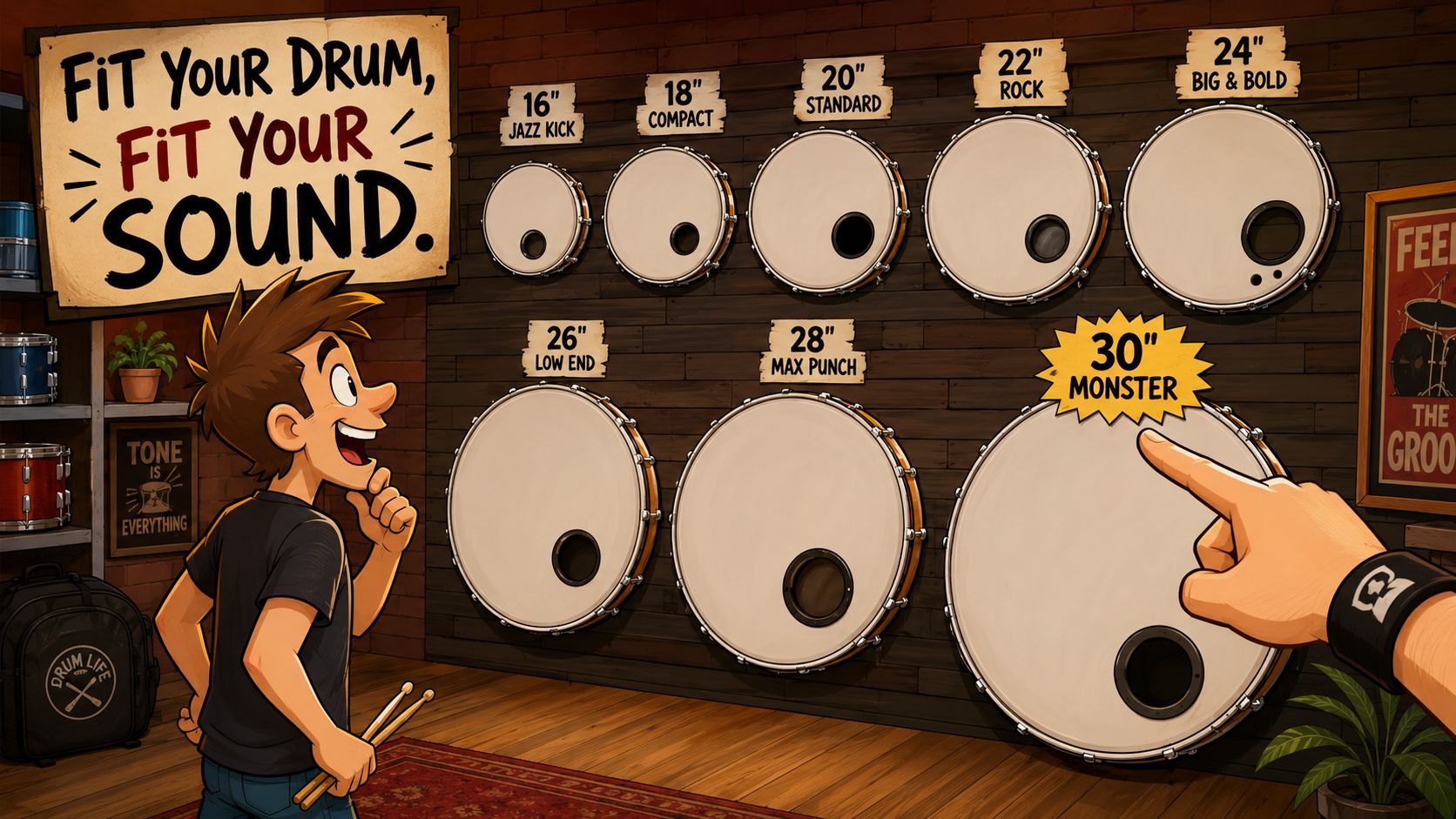
Custom Bass Drum Head supports a wide size range and offers different head brands and clear-head options, which matters because a 16-inch kick for a tight club rig does not behave like a 24-inch or larger head on a church or festival stage. The same logo needs different scaling, different breathing room, and sometimes a different port plan to stay readable once the hoop and claws are in place.
If you have not checked the shell lately, use this quick guide for measuring bass drum heads correctly before ordering. A one-inch mistake is enough to turn a simple order into a delay.
Port placement affects the gig
A mic port changes more than the look. It changes access, mic angle, cable path, and how much of the design survives once the drum is set up on stage.
Low side ports are common because they make front miking easy and keep the center graphic intact. They also tend to work well for fast festival changeovers, where the engineer wants a predictable entry point without shifting stands around your spurs. A higher or more offset port can still be the right call, especially if the logo sits low or the stage layout forces the mic in from an unusual angle, but that choice should be deliberate.
This is one of those details reviews often skip. Under stage lights, a busy printed design can already lose contrast from ten rows back. If the port cuts through the strongest part of the logo, the head stops doing its job visually. In the studio, that may be a minor issue. On stage, it is the first thing people see.
Clear versus coated is a practical choice
Clear head options can look great with internal lighting or a dark riser setup, especially if parts of the artwork are left transparent on purpose. That look is harder to control in bright rooms, where reflections can wash out fine details and make lighter graphics disappear.
A more opaque front head usually reads better from the audience. It also tends to be more forgiving if the band plays a lot of mixed rooms and does not know what the lighting plot will look like until soundcheck. The right choice depends less on taste and more on where the kit will live.
A buying checklist that avoids common mistakes
- Measure the drum itself: Do not trust an old order note or case label.
- Map the port before final approval: Make sure it clears the key part of the logo.
- Match the port to your stage setup: Left, right, or higher placement should reflect how the mic is usually run.
- Choose transparency with a lighting plan in mind: Backlit effects work best when designed from the start.
- Account for hardware visibility: Hoops, claws, and spurs can hide more artwork than buyers expect.
The best custom bass drum head is not just the one with the best artwork. It is the one that still looks clean at downbeat and still works for the engineer at line check.
Comparing Price Speed and Support
The order usually gets placed after the hard part is already booked. The release show is on the calendar, the stage plot is set, and now the front head has to arrive on time, look right under lights, and not create extra email chains over basic details.
Transparent pricing changes the buying experience
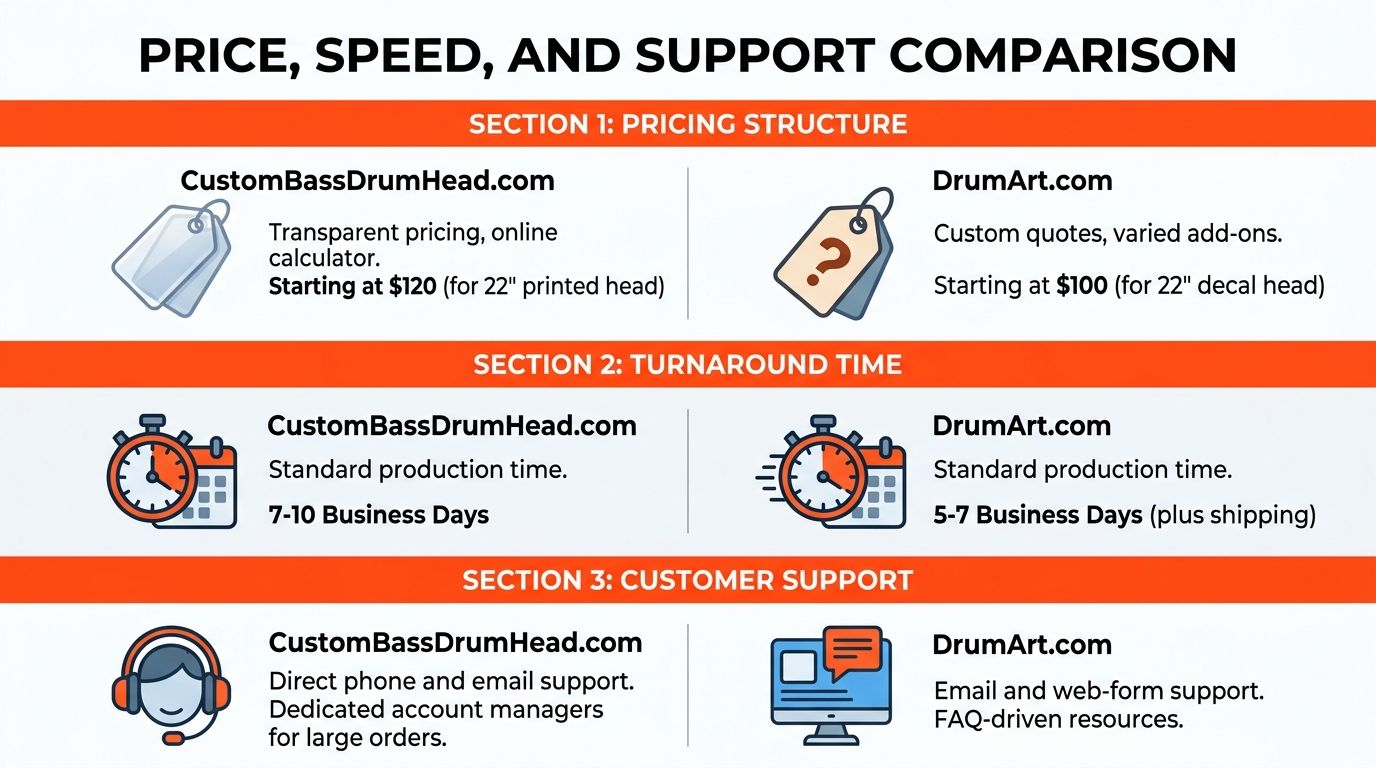
Clear base pricing helps because custom heads are rarely a one-line purchase in practice. The total cost can shift fast if you need file cleanup, a logo resized for a strange drum depth, or a last-minute port adjustment after the mockup comes back.
Custom Bass Drum Head publishes size-based pricing and states there are no setup or separation fees. It also includes a one-year warranty. That kind of clarity matters more than marketing copy. If you are pricing a head for a weekend club rig, a church kit, or a school order, you need to know whether the quoted price is indeed the price.
Head brand also affects the final number, especially if you are still deciding between film types and feel. If you are sorting that part out first, this breakdown of Aquarian vs Evans vs Remo bass drum heads gives useful context before you commit to artwork.
Speed matters when the gig date is already booked
Fast turnaround is not just a convenience. It changes how much risk sits on the buyer.
Custom Bass Drum Head says most orders ship within a few business days after approval, with worldwide delivery and volume pricing available for larger group orders. That is the kind of detail that matters when the head is tied to a real event date instead of a casual future upgrade.
The weak spot in many custom orders is not printing time. It is approval time. If the artwork is not ready, or if somebody has to clean up a low-resolution logo, the schedule can slip before the printer even starts. Buyers with print-ready files usually have the smoothest experience. Buyers starting from a rough screenshot or an old social media logo should expect more back-and-forth and should ask those questions early.
A separate public testimonial on YouTube also points to artwork help being billed separately, with cost depending on design complexity. That is normal in this category, but it is still worth asking about up front because design work can change the total more than the base head price.
Where support actually shows up
Good support is easy to miss until something goes off-script. On a standard order, you may only need a quick proof and a ship notice. On a stage build with specific mic needs, support quality becomes much easier to judge.
| Support scenario | What the buyer needs |
|---|---|
| Existing logo, ready to upload | A fast check that the file will print clean at full size |
| Multi-head order | Consistent specs across kits, especially if the same branding has to match under stage lighting |
| Tight deadline | Clear answers on proof timing, approval cutoff, and actual ship expectations |
| Incomplete artwork | Straight guidance on cleanup, extra cost, and whether the result will still hold up visually from the crowd |
One practical point gets overlooked in a lot of reviews. Support is not only about friendliness. It is about whether the team catches problems before they reach the stage. If a port placement cuts through the band name or a dark logo will disappear on a black riser, good support saves you from buying the same lesson twice.
Real-World Use Cases Who Should Choose Which Service
The best choice depends less on branding language and more on where the head will live. A touring kit, a church stage, a school drumline, and a studio setup don’t place the same demands on the front head.
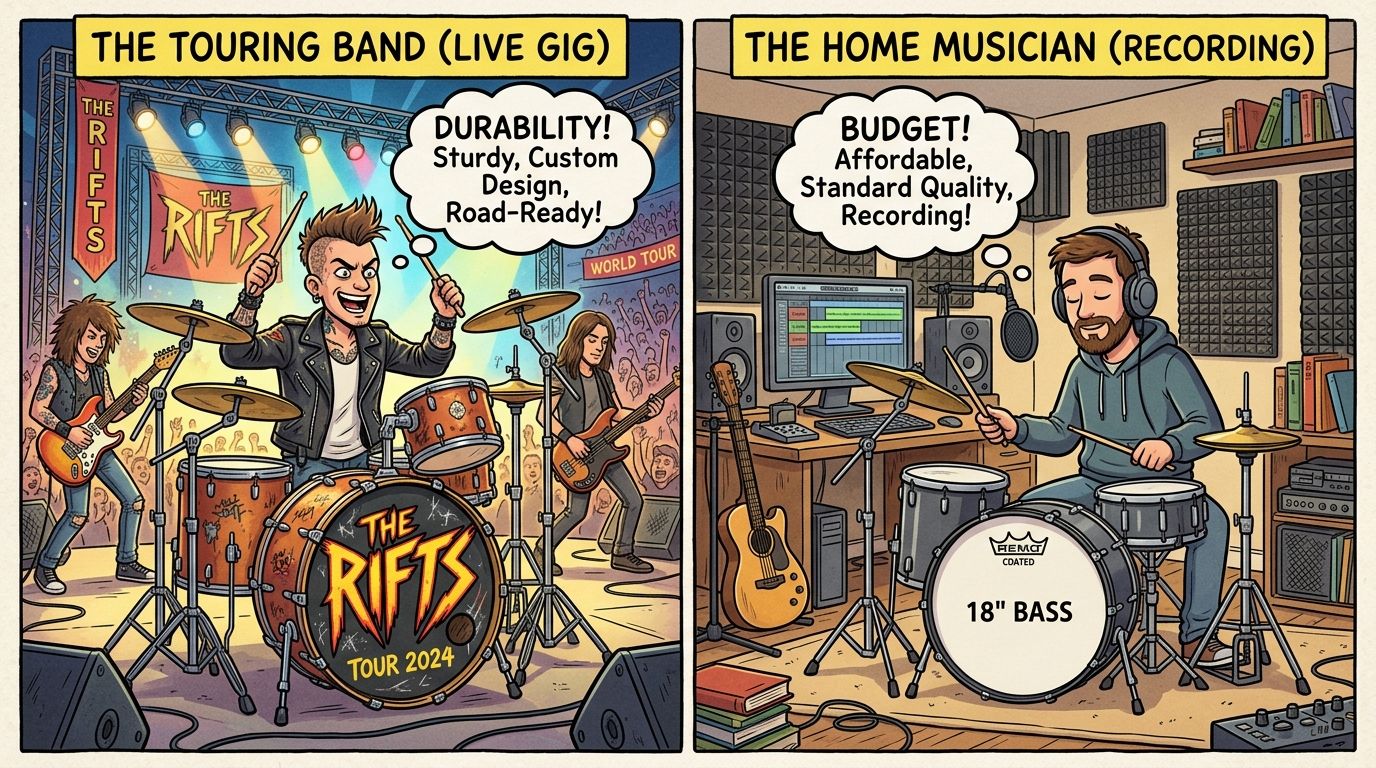
Touring and repeat-gig bands
This buyer needs the fewest possible weak points. The head gets packed, unpacked, lit hard, photographed, and hauled again. A print method that becomes part of the head is usually the practical choice because it avoids the extra layer concerns covered earlier.
This is also the buyer most likely to care about clear visual readability from a distance. A clean front head does real work on stage. It identifies the act, ties the kit into the rest of the visual setup, and looks finished in every room from bar gigs to festival risers.
Schools churches and multi-kit orders
These buyers usually need consistency more than experimentation. Matching artwork across several kits or maintaining a standard branded look makes straightforward ordering more important than boutique-style finish exploration.
The verified business context around volume pricing for larger groups supports that use case well. Schools, worship teams, marching lines, and event-focused organizations benefit when the ordering system is repeatable and the artwork process doesn’t require custom back-and-forth every time.
Studio artists solo acts and detail-focused buyers
This buyer often cares about exact visual alignment. If the logo includes fine lines, gradients, or branded proportions that already exist across album art and promo assets, preview accuracy matters a lot.
For that kind of order, a live mockup workflow becomes more important than extra styling options. The goal isn’t novelty. The goal is getting the approved design onto the mounted head without interpretation errors.
A related consideration is head brand preference. Some drummers care a lot about starting with a specific premium head family for feel, response, or visual familiarity. For buyers thinking through those material preferences in parallel with custom printing, Aquarian vs Evans vs Remo gives useful context.
Buyers chasing a specific specialty look
There is one case where a different route can make sense. If the buyer is focused on a specific laminate finish or a texture-first aesthetic, then specialty finish options may be the deciding factor. That’s a narrower use case, but it’s real.
For most active buyers, though, the stronger priority is simpler. They want a head that looks right, lasts, and doesn’t create ordering drama.
The right custom head isn’t the one with the most options on paper. It’s the one that still looks right after load-out.
The Final Verdict Your Best Bet for a Stage-Ready Head
For buyers making a real purchase decision, the most useful answer comes down to priorities. If the goal is a stage-ready custom head with dependable print integration, a predictable ordering path, and fewer surprises between upload and delivery, the stronger fit is the provider built around direct printing, live mockups, transparent size-based pricing, and quick shipment after approval.
That combination solves the issues that matter most in actual use. The head needs to represent the band well under lights. The design preview needs to be trustworthy. The port and sizing choices need to feel deliberate, not improvised. The price needs to be understandable before checkout, and the process needs to work even when the calendar is tight.
The practical gaps in this category are also revealing. Artwork-assistance pricing often stays vague. Mic port guidance still isn’t explained well enough across the market. Buyers deserve more than a pretty product page. They need a process that respects both the visual side and the working-drummer side of the order.
So for the CustomBassDrumHead.com vs DrumArt.com decision, the better choice for most bands, solo artists, schools, worship teams, and stage-focused drummers is the option centered on integrated printing, accurate previews, and clear purchase details. That’s the safer bet when the head is going on a kit that gets used.
If the goal is a custom head that looks right on stage, fits the drum correctly, and arrives without guesswork, start designing with Custom Bass Drum Head. Upload the artwork, preview the layout, choose the size and port placement, and order a head that’s built for real-world use.